
Sources Behind Previous Residents of an El Paso County Address
One address can leave several kinds of historical trace. The Recorder gives a legal instrument trail. The Assessor gives a parcel card and legal description. Pikes Peak Library District supplies city directories, rural directories, telephone books, maps, newspapers, and house-history guidance. PPRBD and Planning may show dated building or development work. Cemeteries, obituaries, probate, and archives can connect a household to a place without pretending to show every person who lived there.
The era table sets the order of work. Coverage is not a promise that every year or image exists. A gap belongs in the final note.
| Source | Years it covers | Where held | What it shows |
|---|---|---|---|
| Recorder permanent index | Observed from 01/01/1980 | El Paso County Clerk and Recorder | Parties, instruments, dates, legal descriptions |
| Remote Recorder images | 1996 to present as described | Recorder remote-access service | Online image access under subscription terms |
| Colorado Springs directories | 1879 to present, with gaps | PPLD Regional History and Genealogy | Householders, streets, occupations, community clues |
| Rural and telephone directories | Selected rural years; most telephone years from 1907 | PPLD microfilm or book; PPGS finding aid | County-edge and rural address clues |
| Sanborn, plat, permit, and map layers | Series-specific, including historic map and permit spans | PPLD, county, city, PPRBD | Building, lot, street, and parcel change |
| News, obituary, cemetery, probate | Series-specific historical runs | PPLD, Evergreen, CSPM, State Archives | Household, death, estate, and community context |
The El Paso County Recording Department is the first official stop for the recorded part of a past-owner trail.
Anchor El Paso County Previous Residents to a Parcel
Before looking for previous residents, normalize the place. Write the current street number, direction, street type, municipality, ZIP, schedule or parcel number, plat number, and legal description. The Assessor card separates Owner, Mailing Address, and Location. Location is the situs address. The parcel number and legal description can remain useful when a street string changed or a lot was resubdivided.
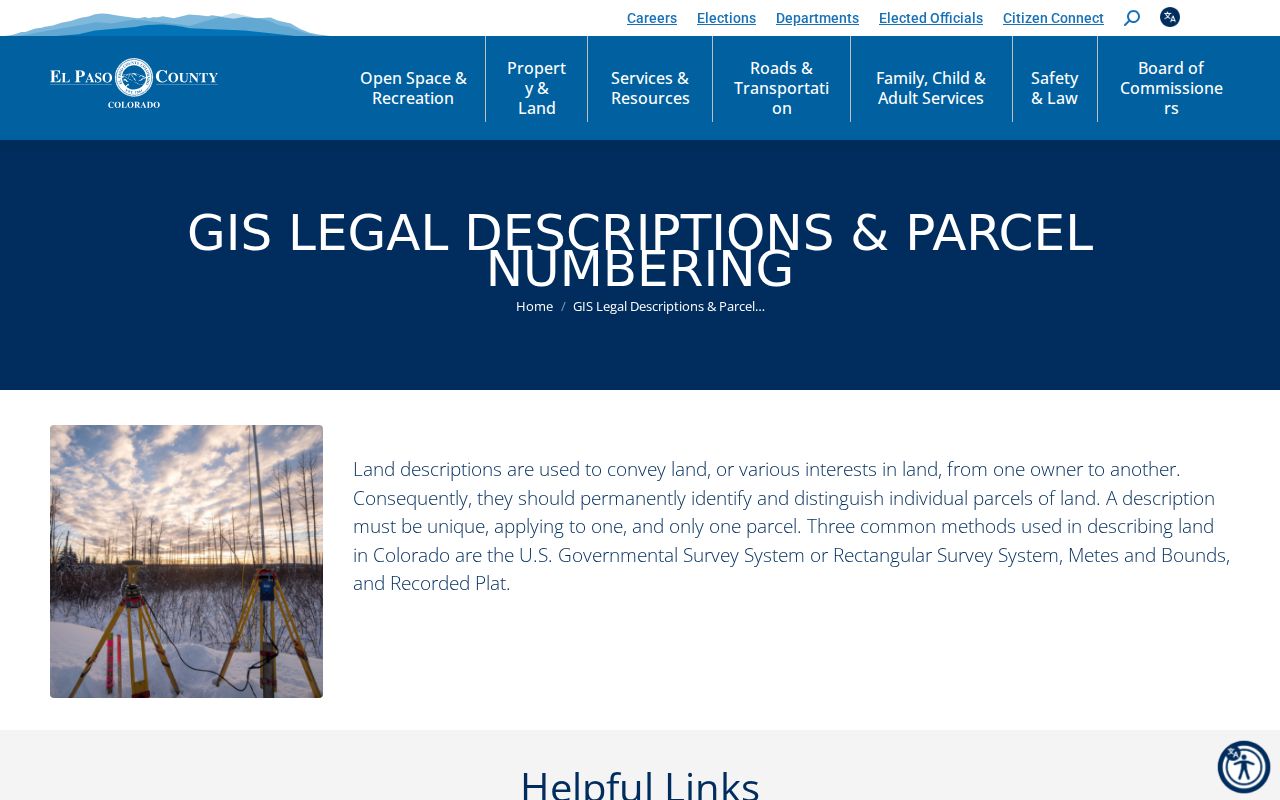
Legal descriptions may use a rectangular government survey, metes and bounds, or a recorded plat lot and block. El Paso County’s Assessor guide explains the 6th Principal Meridian and Colorado Baseline vocabulary, recorded plats, resubdivisions, and parcel numbering. Keep the old description exact. Do not convert an old lot or section into a modern address without a map or parcel check.
The El Paso County Assessor legal-description guide explains the parcel vocabulary used to connect an old address to a current record.
This parcel anchor keeps a previous-residents search focused. It also tells the next office whether the question belongs to a city, an unincorporated county record, or a historical repository.
Walk Previous Residents Through the El Paso County Deed Chain
The Recorder’s real-estate index is the backward trail for recorded ownership instruments. Search a current owner or entity as both grantor and grantee. Use surname-first formatting, then narrow by date, instrument number, Book, Page, subdivision, block, lot, condominium unit, or legal-land fields. Estate and transition types such as Affidavit of Death, Beneficiary Deed, Letters of Testate or Administration, Trust, Power of Attorney, or Release can signal a change in the record, but the index label does not narrate a person’s life.
Save each instrument number, recording date, party role, document type, legal description, and image availability before moving to the next earlier entry. The index observed during research reaches back to January 1, 1980. Remote image access is described separately as 1996 to present, while pre-1996 copy work may require the main office. A visible index line is not a certified copy.
- Open the current parcel card and copy the owner, schedule, legal description, and deed link.
- Search the named party as grantor and grantee in the Recorder index.
- Use the newest relevant deed or transition instrument to identify the prior party.
- Repeat with the prior party, checking the legal description and recording date each time.
- Stop or switch to a copy request when the index, image, or parcel description no longer supports a safe link.
- Grantor
- The party shown as transferring, releasing, or conveying an interest in an instrument.
- Grantee
- The party shown as receiving or gaining the recorded interest in that instrument.
- Chain of title
- A sequence of recorded transfers or related instruments connected to one legal description.
- Legal description
- The formal land identifier used in a deed or plat, which may differ from a street address.
Older El Paso County Records for Previous Residents
The public Recorder index and the image service have different descriptions. The index coverage line observed during the research run begins in 1980, while the remote-access page describes online images from 1996 to the present. When a pre-1996 instrument matters, the Recording Department’s main office is the safer copy route. The office says copy searches and plat maps are handled at the main location before 4:00, and requests can use copyrequests@elpasoco.com or (719) 520-6198.
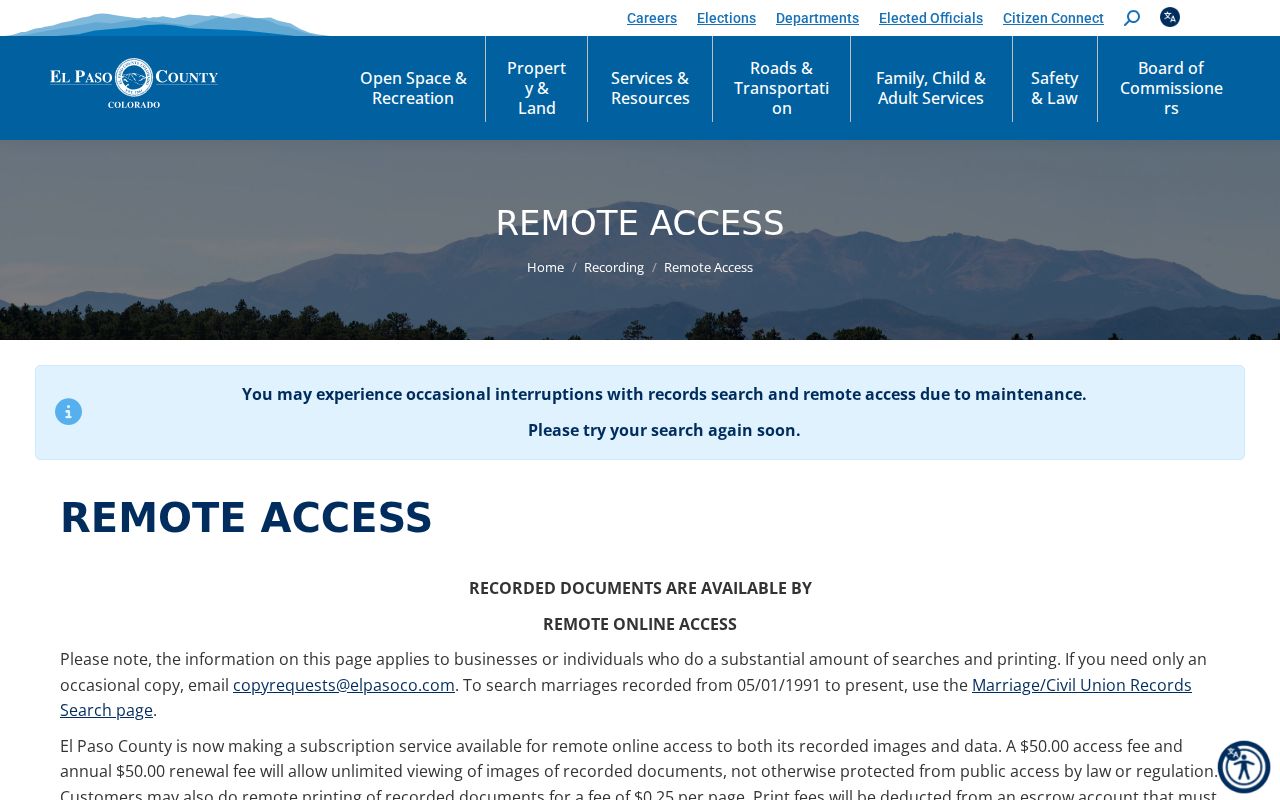
Remote access is a separate subscription with a $50 charge and $50 annual renewal, $0.25 per page printing, application or licensing terms, and escrow that may begin at $100. Those terms are for image access, not for the free public index. If the goal is a historical house story, ask the library or archive to identify the record series before paying for a broad image search.
The Recorder remote-access page explains the image subscription route and its coverage note.
El Paso County Copy Fees for Past-Resident Records
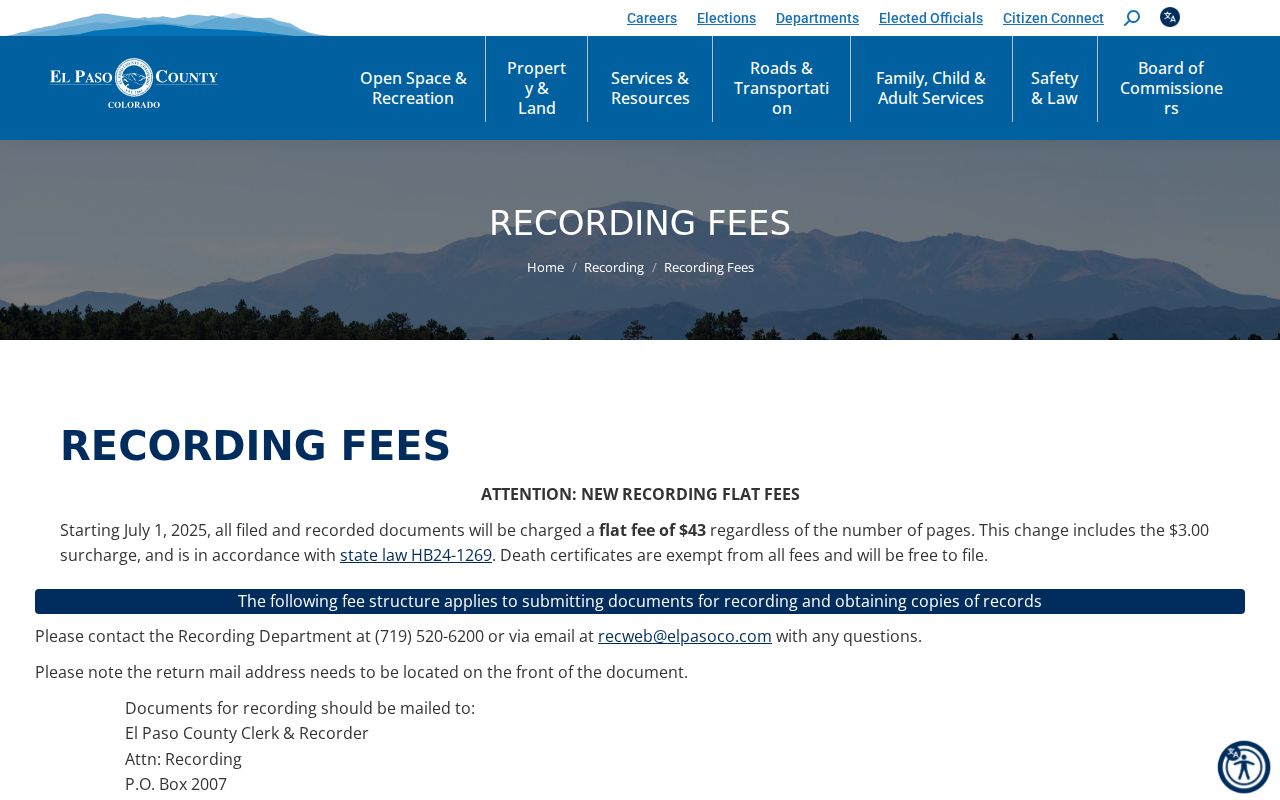
Current county recording information says a recorded document costs $43, ordinary copies are $0.25 per page, and certification adds $1 per document. A plat copy is listed at $3 per page certified plus a $1 certification charge. A death certificate is free to record. Use the current fee page for payment details because older forms can carry different certification amounts.
The Clerk and Recorder warns about solicitation letters that charge around $90 for a deed copy available from the county at the ordinary copy rate. Verify the instrument number, official domain, office email, and current fee page before paying. A focused request to the custodian is part of the previous-residents trail, not an extra service sold by a letter sender.
The El Paso County recording-fees page is the current fee reference for copy and certification work.
El Paso County Directories for Previous Residents
Deed chains show recorded legal interests. Directories show a different household layer. PPLD’s city directories run from 1879 to the present with gaps, and the street cross-reference becomes more useful after 1900. Search the surname and street sections in nearby available volumes. The Pikes Peak Genealogical Society identifies rural directory microfilm for selected years and telephone books for most years from 1907.
A directory entry can list a householder, occupation, spouse, business, or street address at publication time. It may omit a household, use an old number, or cover only the head of household. The full collection method is on the El Paso County city directory page and the PPLD house-history guide. Here the directory is used as a layer in one address trail, alongside the Recorder and map evidence.
For a historical household, pair a directory year with a matching census year, then test the place against a Sanborn sheet, plat, newspaper, cemetery, obituary, or probate record. Each source should keep its own date and purpose.
Street Renumbering Can Hide El Paso County Past Residents
PPLD flags Old Colorado City and Westside street-name and number changes from the 1870s through 1917, including cases where odd and even numbers flipped. A search for a modern number can miss a previous resident even when the historic entry is nearby. Search the old street name, cross street, surname, lot and block, and adjacent entries. Then compare the address with a plat or Sanborn map.
PPLD also points to building permits from March 1900, a gap from April 1902 through September 1907, county permit material from 1954 through 1964, and index gaps around 1900 and 1952 through 1965. A missing permit or directory year is an archive gap, not proof that a building or household was absent.
This is where the current parcel anchor earns its value. It gives the historical name or number a place to be tested without erasing the original record form.
Pair El Paso County Previous Residents With News and Maps
A past-residents question becomes clearer when a directory name is connected to a dated community event. PPLD NewsFinder provides Gazette and other-title citations or full text from 1872 onward, including obituaries. Local death registers, church records, Veterans Graves Registration, Evergreen and Fairview cemetery searches, and State Archives probate series can add a death, family, congregation, burial, or estate clue.
Use a simple process flow: address and historic name, directory year, street or map check, newspaper or obituary, then deed, tax, probate, or cemetery corroboration. The record may show a household clue without revealing a complete list of people or a modern address. PPLD and Colorado Springs Pioneers Museum reading-room staff can help identify a collection when an online search ends.
State Archives has El Paso probate from 1922 to 1976 and separate marriage, death, court, and divorce series. Ask for the series and date range. Do not assume that a broad date rule opens every historical record.
El Paso County Recording Alerts for Past Residents
The free Recording Notification Service launched in November 2025 and allows up to ten names or name variations for later alerts about recorded deed or lien-related documents. It can help protect a known record interest after the historical trail has been found. It does not search backward, replace the Recorder index, or provide a complete house history.
When an alert arrives, open the official index, compare the instrument number and party role, and use the fee page or office for a copy. Keep the alert date and the underlying recording date separate. That small chronology protects a previous-residents project from confusing a new notification with an old ownership event.
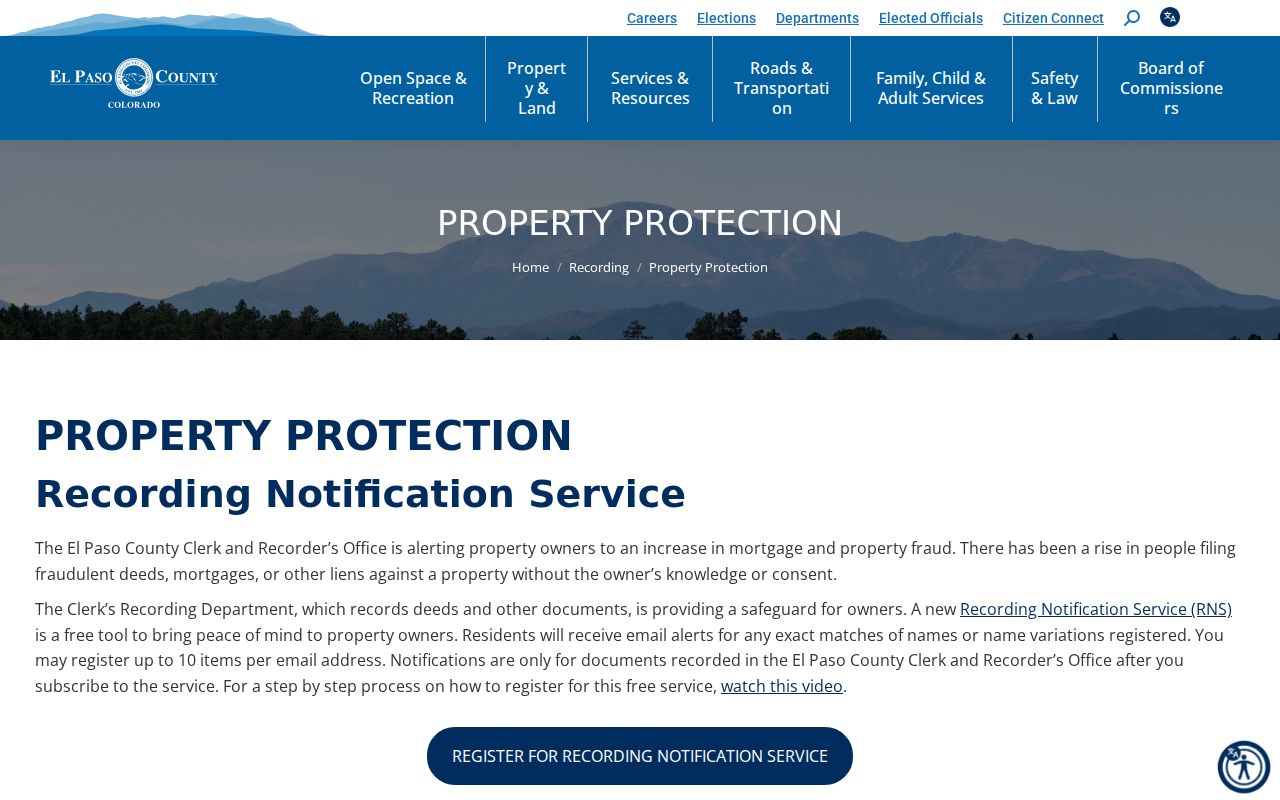
The El Paso County property protection page describes the Recording Notification Service and its limited forward-looking purpose.
What El Paso County Previous Residents Research Cannot Prove
Previous residents research can show a recorded owner, a listed householder, a dated obituary, a permit applicant, a cemetery connection, or a map-supported address. It cannot prove that every person in a household was listed, that an owner lived at the property, that a directory entry continued between editions, or that a historical name is the same person as a current name.
Keep the source relationship visible. Say “listed in the 1907 directory,” “named as grantee on the recorded instrument,” or “shown in the cemetery search,” rather than flattening the sources into a single resident claim. Confidential voter, ACP, vital, court, and public-safety restrictions remain in force when the subject is living.
Lawful house history. Use previous-resident research for genealogy, estate work, reconnecting, and understanding a place. Do not use an address trail to stalk, harass, intimidate, or harm a living person.
A careful gap is a result. When the record stops, name the office, collection, or missing image and give the next lawful access channel.