
What an El Paso County Resident Lookup Can Confirm
There is no verified all-purpose El Paso County resident roster in the official sources inspected. Instead, each office answers a narrower question. The Assessor shows a parcel relationship. The Recorder shows a party to a recorded instrument. Elections shows a defined voter record. Courts show a docket or document route. Public Health controls eligible certificates. A library or archive shows a dated historical listing. Jail, DOC, and CBI tools show status-specific information with their own warnings.
The coverage table keeps one person search from becoming a false identity match. Record the exact source, retrieval date, and relationship shown before moving to the next check.
| Record | What it confirms | Where | Access |
|---|---|---|---|
| Assessor property card | Owner, mailing, situs, parcel, legal description | El Paso County Assessor | Public portal; office copy for legal use |
| Recorder instrument index | Name or entity on a deed, lien, plat, or other filing | Clerk and Recorder | Free index; copy and image limits apply |
| Voter record | Individual registration confirmation or county product field | Colorado SOS or El Paso Elections | ZIP and birthday or defined request |
| Court docket or document | Case listing or specified filed document | Colorado Judicial Branch | Filter, request form, or courthouse |
| Vital certificate | Eligible birth, death, marriage, or related record | Public Health, Clerk, or CDPHE | Direct and tangible interest rules |
| Historical directory or obituary | Dated household, community, or death context | PPLD, CSPM, or archive | Digital, microfilm, reading room, or request |
A lookup that ends with a custodian route is still useful. It tells the requester what the public interface can show and what must be obtained through a form, counter, or archive.
Choose the El Paso County Identity Route
Start with the fact already in hand. An address points first to the Assessor, GIS, or PPRBD. A deed, trust, lien, or estate clue points to the Recorder. A voter question points to the state form or county Elections. A court concern points to the docket and then the document request form. A family-history question may be safer and richer through PPLD, NewsFinder, cemetery, obituary, or archive sources.
Search El Paso County names in more than one form. Use surname first in the Recorder, test a middle initial or suffix, and keep a business or trust role visible. A same-name result is only a possible match until a second source agrees on an address, parcel, date, case year, or other lawful identifier. Preserve a no-result message as a portal-specific result rather than a countywide conclusion.
For a current property relationship, pair the Assessor card with a Recorder instrument. For a historical person, pair the city directory with a newspaper, plat, obituary, cemetery, or probate lead. For a status record, use the agency’s own verification route and keep the retrieval date attached. This is the core discipline of a responsible resident lookup.
If the name belongs to a company or regulated professional, use the Colorado Secretary of State business search or the DORA license-verification portal for filing and status context. A registered-agent address, principal address, or license record is not proof of a residence, so keep that distinction in the note.
El Paso County Court Names Need Case Context
The Colorado Judicial Branch docket portal allows a name search, but it requires at least one filter plus a date. The filter groups include judicial district, county, courthouse, court type, division, case date, case year and class, party name, business name, attorney name, and attorney bar number. A docket is an index or register entry. It is not a complete case file, a judgment, or proof that a named person lives in El Paso County.
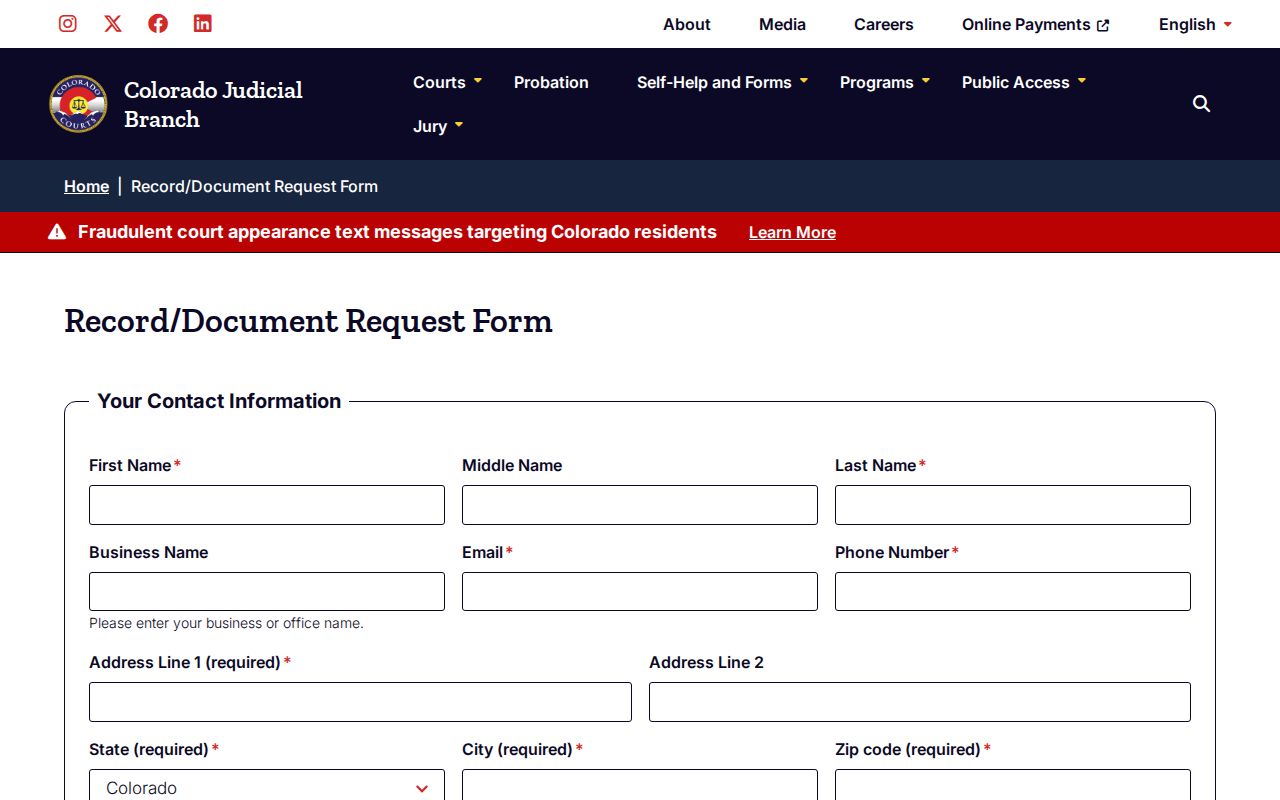
For a document, use the official Court Record/Document Request Form or contact El Paso Combined Courts at 270 S Tejon Street, Colorado Springs. The request form asks for the requester’s name, business, email, phone, address, state, city, ZIP, case number or case type, year, county, party names, and other identifying information. It warns that juvenile, sealed, suppressed, probate, and confidential material may be restricted.
| Court search field | Why it matters |
|---|---|
| County, courthouse, court type | Places the case in the correct Colorado Judicial Branch route |
| Date range or specified date | Satisfies the portal’s date requirement and narrows the result |
| Case year, class, sequence | Separates case numbers that share a name |
| First name and last name | Tests a party without treating the result as identity proof |
| Attorney name or bar number | Offers a different filter when a lawyer is known |
Visible document choices include divorce decree, parenting plan, support order, complaint, disposition or sentence order, protection order, judgment, satisfaction, probate letters, will, trust, petition, and closing. A name search fee, copy fee, certification fee, or research charge may apply under the stated court schedule.
The Colorado court record request form shows the identity, case, party, and document fields needed for a focused request.
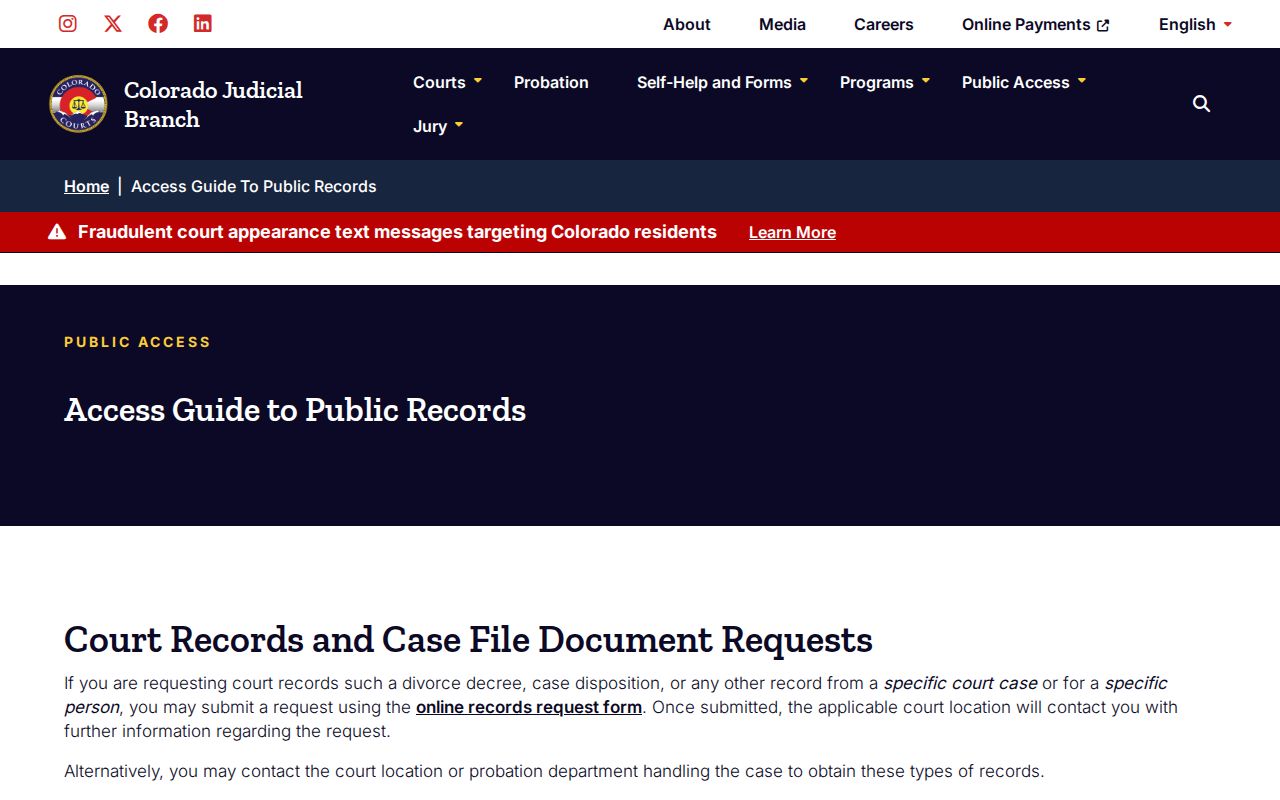
The Colorado Judicial public-records access guide explains why registers, documents, and restricted cases must be kept separate.
Voter Confirmation in El Paso County Has Limits
The Colorado Secretary of State individual lookup asks for First, Last, ZIP, and Birthday in month/day/year format. The form says a one-name search should use the last-name field, a recent move may require a former ZIP, and a confidential voter or person under 18 may not appear. That makes the state tool a self-service confirmation route, not a downloadable resident directory.
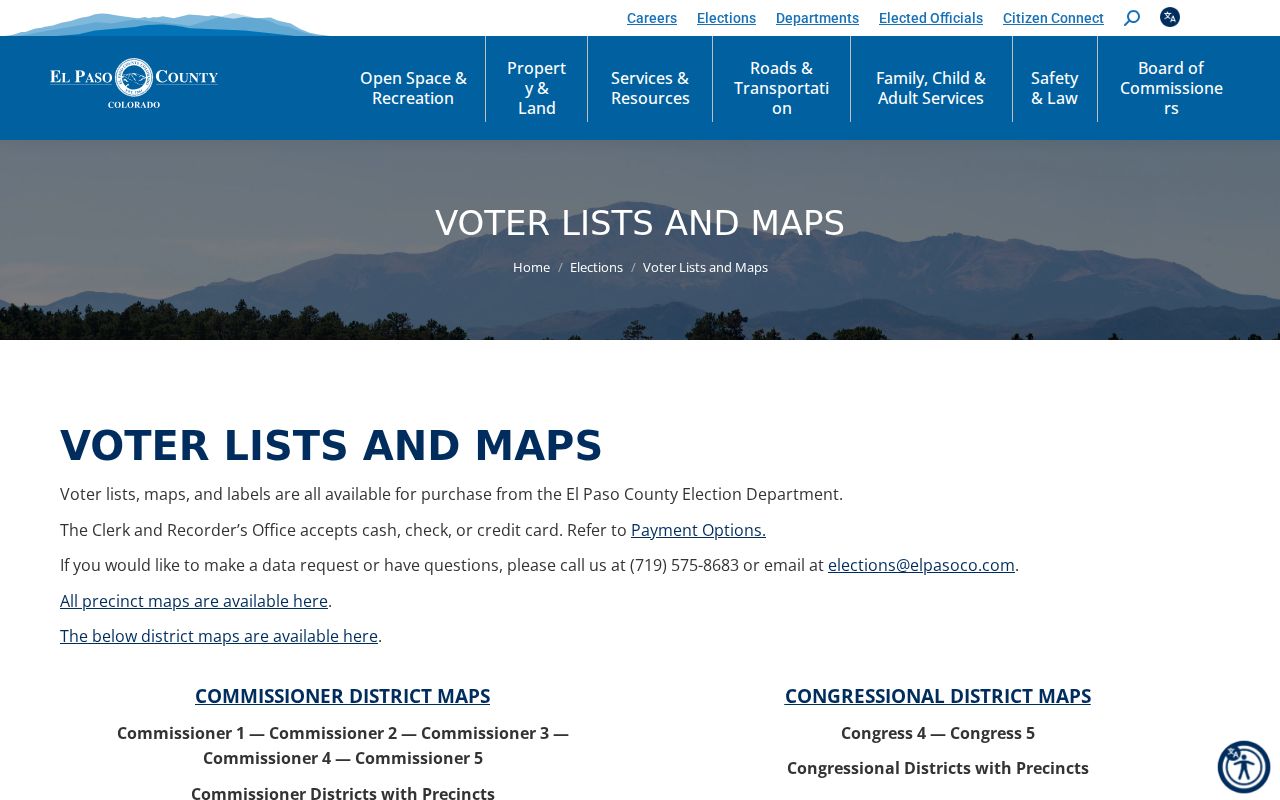
El Paso Elections sells defined voter reports, labels, and maps. The county page lists a basic report at $25, a custom report at $50, CDs at $1.25, printed pages at $0.05 per side, and map prices that vary by format. The page says products are ready no later than two business days and can be requested in person or by phone. Ask Elections about the current product scope before paying.
Normal El Paso County voter-product fields can include name, residential address, party affiliation, affiliation date, phone if supplied, gender identity if supplied, birth year, and vote history. Social Security number, driver-license number, full birth date, email, ballot envelope, and signature are private. Confidential voters can request that future lists omit their records; older publications may not be recoverable.
The El Paso County voter lists and maps page describes products, prices, request routes, and protected categories.
Vital Records Require a Direct Interest
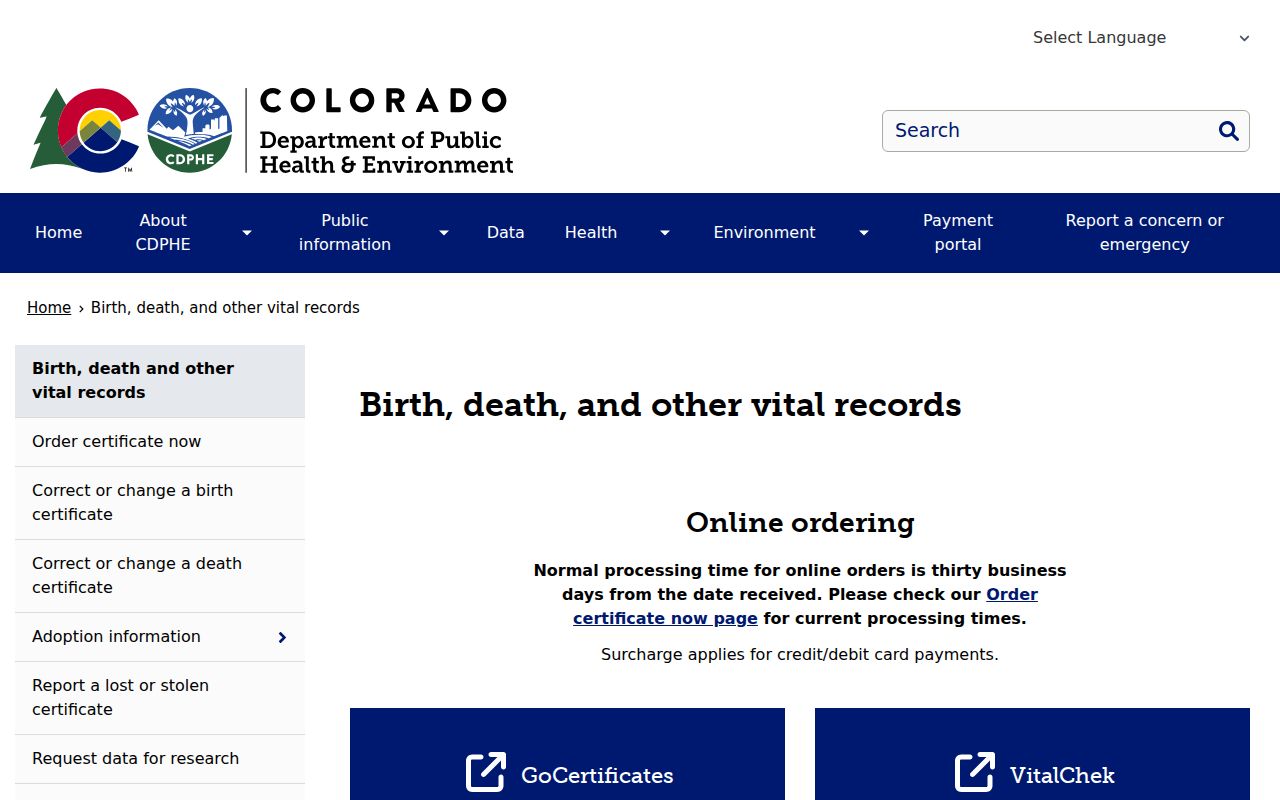
Birth, death, marriage, and divorce records sit behind different custodians and eligibility rules. C.R.S. section 25-2-117 makes vital records confidential and requires a direct and tangible interest for a certified copy. CORA does not bypass that rule. Birth and death requests go through eligible county Public Health or CDPHE routes, marriage and civil-union licenses through the Clerk and Recorder, and divorce or separation matters through the district court.
El Paso Public Health lists the Citizens Service Center at 1675 W Garden of the Gods Road, Suite 2044, with (719) 575-8492. The page states a first copy is $25 and each additional same-order copy is $20. Beginning August 3, 2026, appointments are no longer required, and walk-ins are first come during regular hours. Mail requests need the application, ID, proof of eligibility, and a nonrefundable fee.
For historical questions, State Archives birth-record guidance says records held there are at least 100 years old and generally do not include births after 1908. El Paso death series include a death register from 1899 to 1907 and coroner records with separate date spans. A directory, obituary, cemetery record, or archive citation may answer a family-history question without seeking a restricted modern certificate.
The Colorado Vital Records page shows the state and county custody split for eligible orders.
Public-Safety Records Are Status Checks
The El Paso County Sheriff jail search accepts a last name of at least two characters or a booking number of at least ten characters. Results can show booking, name, physical descriptors, location or building, court date, case number, bond, release, holds, and warrants. The page says it is not an official criminal-justice record and directs verification to the booking desk at (719) 390-2151.
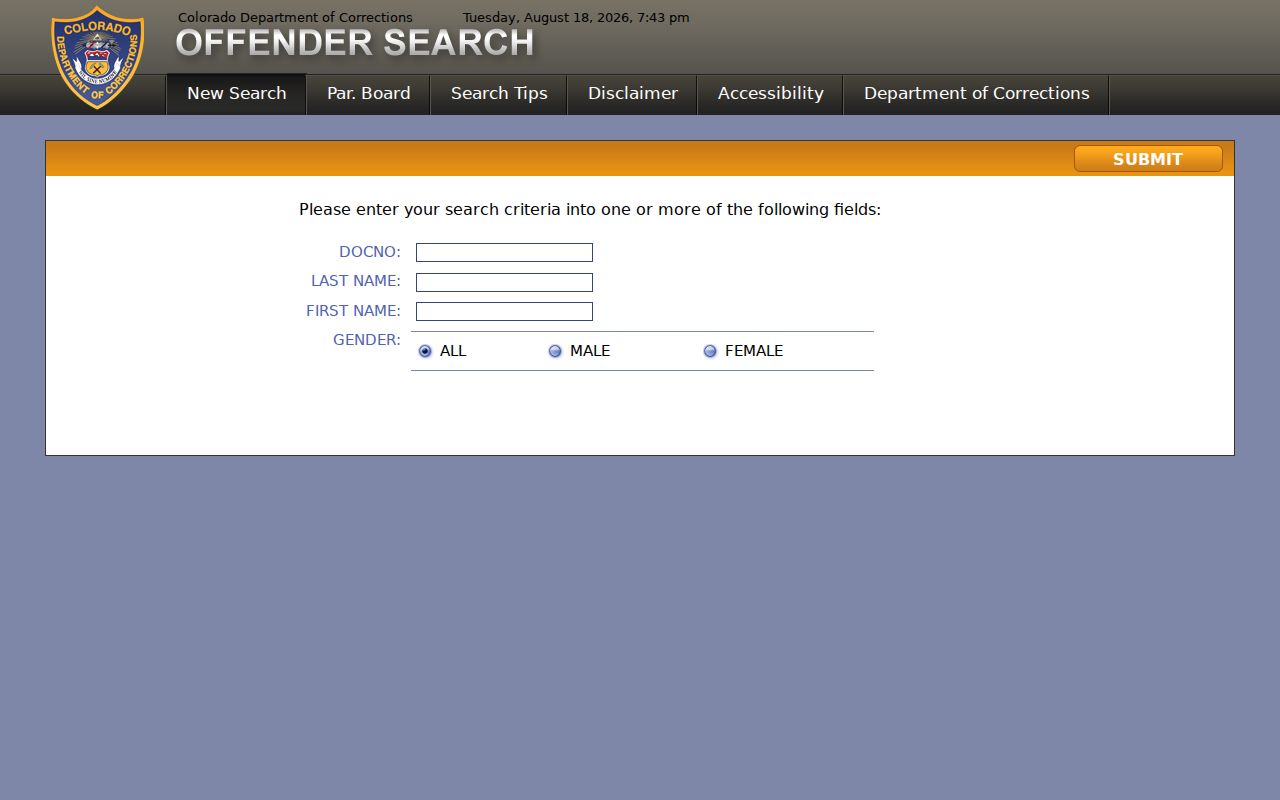
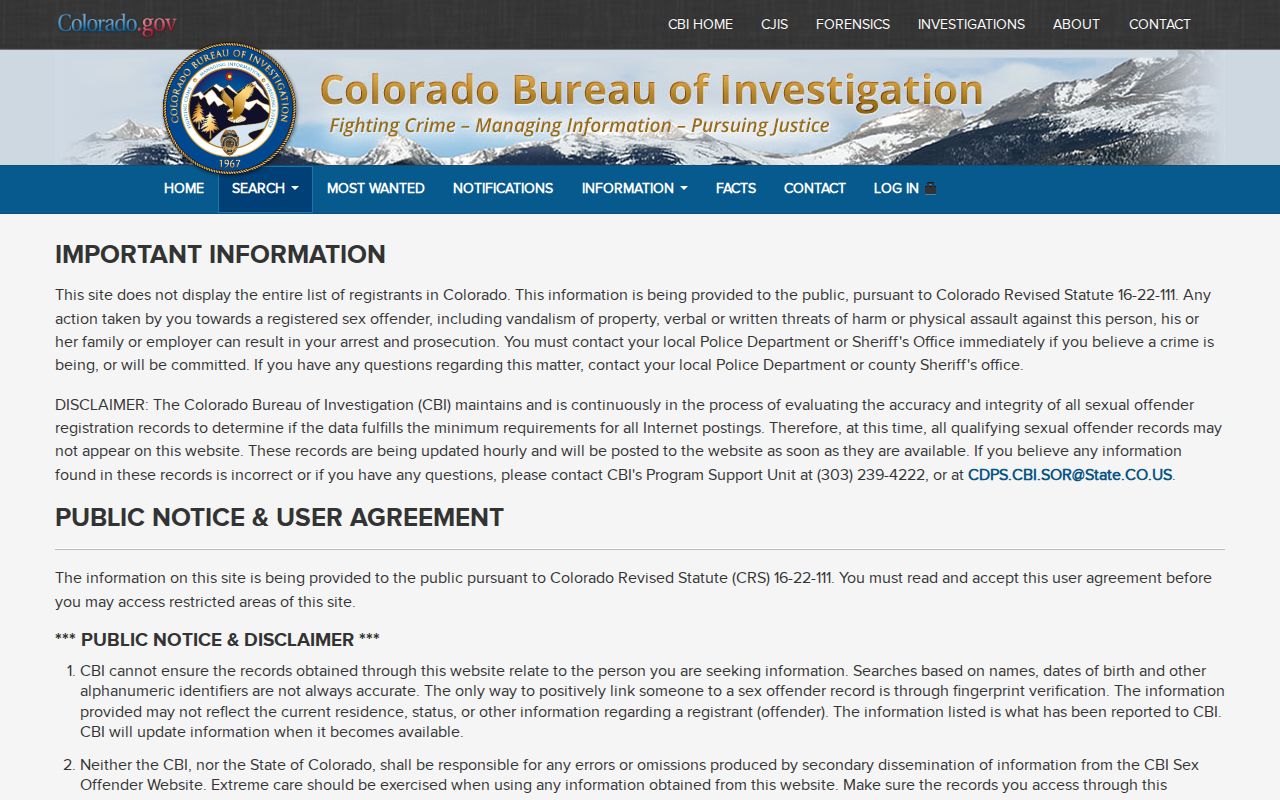
Colorado DOC uses DOC number, last name, first name, and an all, male, or female gender choice, with a CAPTCHA possible. The portal warns that data changes frequently and official time calculations require DOC. The CBI sex-offender registry updates hourly, says maps are not guaranteed, excludes some categories, and prohibits harassment or retribution. These are public-safety tools with narrow purpose, not resident lists.
The Colorado Department of Corrections offender search provides the statewide custody-status fields used in a carefully labeled resident lookup.
The CBI registry search agreement states the update, map, completeness, and misuse limits.
Same Names Need an El Paso County Second Check
A same-name match is common in a county this large. Test spelling, middle initial, suffix, party role, date, municipality, parcel, ZIP, or case year before accepting it. Search the Recorder as both grantor and grantee. Compare an Assessor parcel card with the instrument’s legal description. Keep a business, trust, or estate role in the label. If two records disagree, report the conflict rather than choosing the more convenient row.
- Docket
- A court case register or index entry, not the complete file or final outcome.
- Index versus image
- An index points to a record; an image or certified copy is a different access level.
- Certified copy
- A copy issued or certified by the custodian under its rules, not a screenshot of a search result.
- Possible match
- A provisional identity label used until an independent source or custodian-confirmed document agrees.
When a person-first search needs an address context, move to the address workflow in the El Paso County street directory. When it needs a historical household, use the city-directory shelf rather than forcing a current source to answer an old question.
Historical Clues Can Serve a Resident Lookup
PPLD NewsFinder, death registers, church records, cemetery searches, directories, and microfilm often supply the human context missing from a current database. A newspaper may show a move, obituary, anniversary, address, or organization. Evergreen Cemetery and Fairview cemetery records can provide a burial or ownership trail. Colorado Springs Pioneers Museum holds local manuscripts, photographs, maps, and ephemera. State Archives holds series for El Paso probate, naturalization, marriage, divorce, death, and court material.
Colorado’s Voluntary Adoption Registry is a separate official route for eligible adoption connections. It uses a notarized application, identification, fee, relationship proof, and consent or matching rules. It is not an open directory. The same principle applies to a family-history resident lookup: use the record designed for the question, and respect the access rule that comes with it.
Historical El Paso County evidence should keep its date and form. A directory entry, obituary, or burial search can establish a community connection at a time. It does not certify a current address or fill a gap in a restricted certificate.
Verify an El Paso County Name and Address
A one-person verification task should move from a broad clue to a precise record. Suppose a name is tied to an El Paso County address. The first result can be a parcel card, but the second source should test the relationship rather than repeat the same data. A deed may confirm a party to a transaction. A voter record may confirm a status if available. A directory or newspaper may add a historical date.
- Write the name, address, municipality, and date of interest without changing the source’s spelling.
- Search the Assessor by address or owner and save owner, mailing, situs, schedule, and legal description fields.
- Search the Recorder in both party positions and narrow by date, document type, parcel, or instrument number.
- Use the correct voter, court, vital, library, or public-safety route only if its purpose fits the question.
- Report the relationship shown, the retrieval date, and any privacy, missing-year, or no-result limit.
This workflow makes a resident lookup auditable. It does not promise a complete profile, and it avoids treating an owner, voter, party, or historical listing as a single universal identity label.
Legal Boundaries Around an El Paso County Resident Lookup
Public access has limits. Vital certificates require eligibility. Court records can be sealed, suppressed, juvenile, probate, domestic, or otherwise restricted. Voter records protect specified fields and confidential categories. The Address Confidentiality Program can provide an eligible survivor with a substitute address. Assessor and Recorder fields are public in context but do not reveal every household member.
Do not publish a stitched list of private people simply because separate fields were visible. Do not infer a current address from a jail, DOC, registry, business, license, court, or old directory hit. Preserve redactions and unavailable fields as such. Ask the custodian when the official source is unclear.
Lawful personal use. Resident lookups in El Paso County can support genealogy, reconnecting, estate research, civic transparency, and personal safety awareness. Never use a name trail to stalk, harass, intimidate, or harm another person.
Accuracy comes from restraint. A careful record note says what the source shows, what it does not show, and where the next lawful request belongs. For an identifiable county-held record that is not online, the El Paso County CORA route may be appropriate, subject to exemptions and redactions. It does not bypass vital-record eligibility or court restrictions.